How time spent in Nature could reshape your relationship with food
10/24/2026 / By Willow Tohi
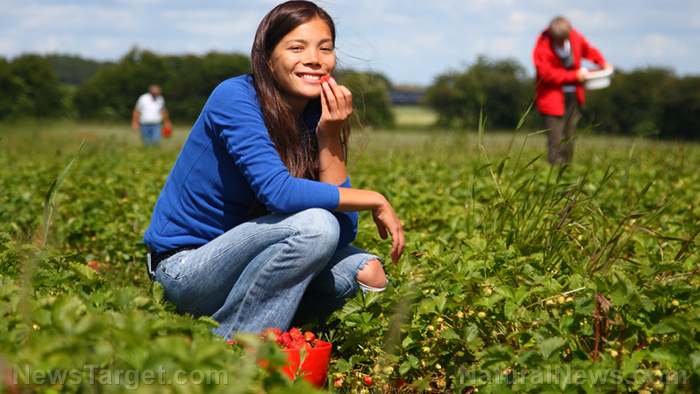
- A UK survey of 500 adults found no direct link between nature contact and intuitive eating, but an indirect connection through body appreciation and self-compassion.
- People who spent more time in nature reported higher levels of body appreciation, which was the strongest predictor of eating based on hunger and fullness cues.
- Self-compassion served as a second pathway, helping people respond to difficult emotions without turning to food.
- The findings held across gender, income, education levels and other demographic factors.
- Researchers caution the study is correlational and cannot prove that increasing nature time directly changes eating habits.
The connection researchers found
A new study published in the journal Body Image has identified an unexpected pathway between time spent outdoors and healthier eating patterns. Researchers surveyed 500 adults in the United Kingdom in May 2026 to examine how nature contact relates to intuitive eating, a practice of eating based on internal hunger and fullness cues rather than external diet rules.
The research, led by Anglia Ruskin University professor Viren Swami, found that people who spent more time in nature scored higher on intuitive eating measures. But the connection was not direct. Instead, nature appeared to work through two psychological traits: body appreciation and self-compassion.
Participants who reported more frequent and longer nature contact also reported greater appreciation for what their bodies could do, not just how they looked. They also showed more self-compassion, or the ability to treat themselves with kindness rather than harsh judgment. Both traits were independently linked to more intuitive eating.
Why body appreciation matters for eating
Body appreciation emerged as the strongest pathway in the study. When people feel less critical of their bodies, they may be more willing to trust internal signals about hunger and fullness rather than overriding them with external rules from diet plans or social pressures.
The study measured body appreciation through statements such as “I respect my body.” Higher scores on this measure consistently predicted higher intuitive eating scores, even after controlling for age, income, education, disability status and other factors.
This finding aligns with earlier research showing that negative body image often drives restrictive dieting, emotional eating and ignoring hunger cues. Shifting toward body appreciation appears to break that cycle.
Self-compassion as a buffer
Self-compassion worked as a second pathway. The study suggests that people with higher self-compassion may be better able to respond to stress or difficult emotions without turning to food as a coping mechanism.
A hard day becomes less likely to end in impulsive eating and more likely to result in food choices that meet genuine physical needs, the researchers wrote. Self-compassion has been linked in prior studies to body appreciation as well, creating what the authors described as a “serial pathway” from nature to self-compassion to body appreciation to intuitive eating.
What the study cannot show
The survey captured a single moment in time, meaning researchers can identify relationships between factors but cannot prove that more nature time causes better eating habits. People who already eat intuitively and feel good about their bodies may simply choose to spend more time outside.
The sample also skewed toward higher education levels, with about two-thirds holding university degrees compared with roughly one-third of UK adults overall. Participants reported an average of 19 hours per week in nature, but half reported 12.5 hours or fewer, and self-reported time outdoors tends to be inflated.
Swami told Earth.com that the study was not designed to identify a minimum “dose” of nature needed to influence eating habits. He advised people to spend as much time in nature as they are comfortably able to, without treating it as a prescription.
Practical applications
The findings suggest that efforts to improve eating habits might benefit from starting somewhere far removed from food itself. Rather than adding more rules, tracking, or restriction, spending time in natural settings may help build the internal trust that intuitive eating requires.
Simple steps such as walking in a park for 10 to 15 minutes, eating a meal outside or near a window with a view of trees, or starting the morning outdoors before checking a phone may support body appreciation and self-compassion over time.
Parks and green spaces could have a place in public health strategies for healthier eating, Swami said, though how to implement that requires careful thought. Replication studies in other countries and longitudinal research tracking the same people over time would be needed before any formal nature prescription for eating habits could be recommended.
Sources for this article include:
Submit a correction >>
Tagged Under:
Cures, environ, health science, longevity, mental, Mind, mind body science, natural health, prevention, remedies, research
This article may contain statements that reflect the opinion of the author
RECENT NEWS & ARTICLES