10-Minute Stretching Routine Aimed at Bladder Meridian May Reduce Leg Swelling, Proponents Say
07/14/2026 / By Morgan S. Verity
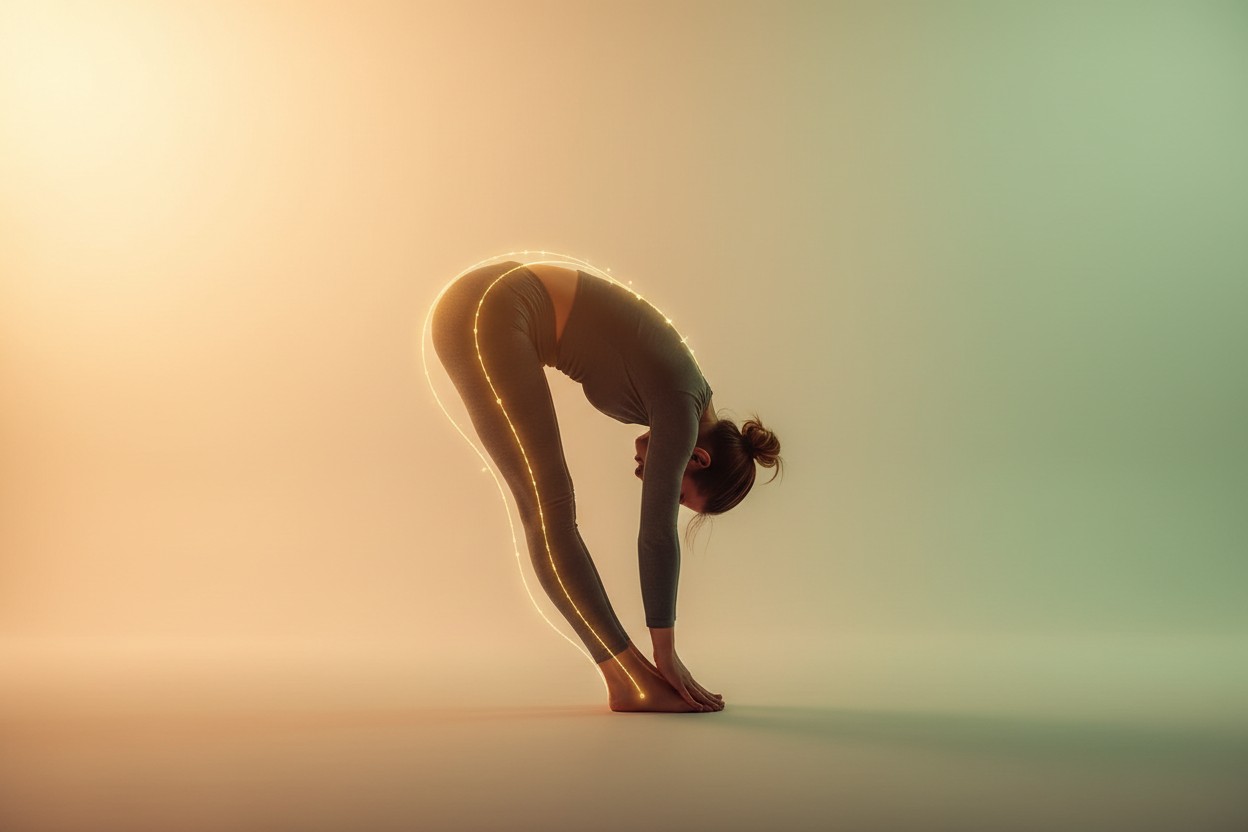
A 10-minute stretching routine targeting the Bladder meridian, a concept from Traditional Chinese Medicine (TCM), may help alleviate leg swelling and improve circulation, according to certified personal trainer Amber Yang. Yang, who developed the routine, recommends performing the exercises between 3 p.m. and 5 p.m., a period when the Bladder meridian is said to be at peak activity.
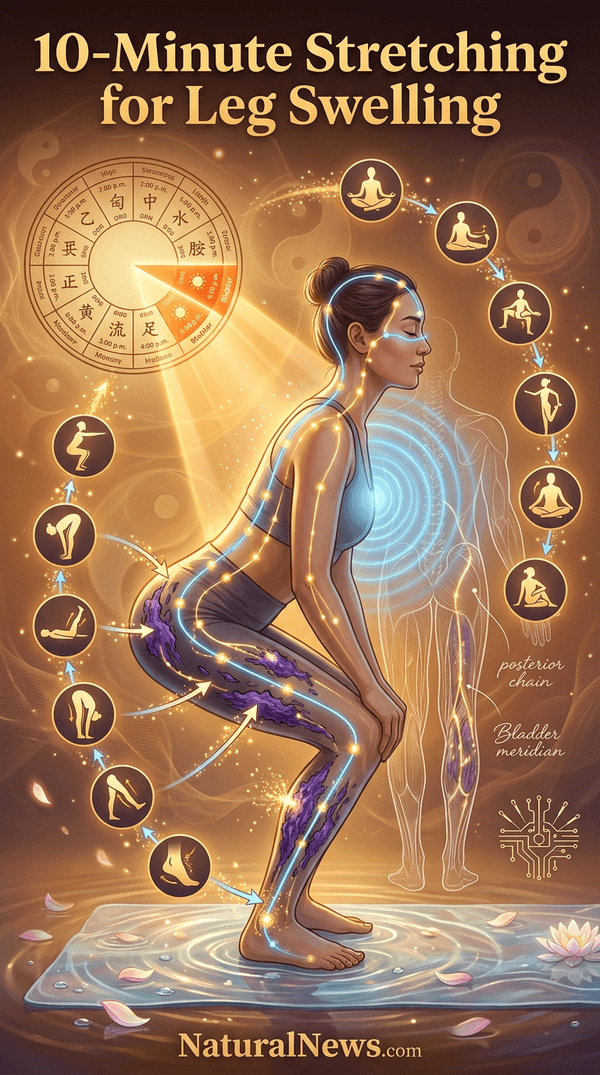
The routine consists of ten slow, controlled movements including foot flexes, hamstring stretches, forward folds, supine leg kicks, and a squat-to-stand. Each movement is performed with natural breathing, aiming for gentle tension rather than pain, Yang stated in a July 2026 article. Proponents suggest that regular practice may result in lighter legs, increased flexibility, reduced tension, and more energy.
TCM Perspective on Leg Swelling and Detoxification
Traditional Chinese Medicine attributes leg swelling and fatigue to stagnation along the Bladder meridian, described as the body’s longest energy pathway. The meridian is said to regulate water metabolism and support natural detoxification by maintaining fluid balance, rather than through the elimination of undefined toxins, according to TCM practitioners. [3] notes that poses such as the downward-facing dog activate the bladder channel, improving the flow of qi through associated organs.
Research on meridian theory has explored the physiological basis of these energy pathways. [5], citing work by researcher Robert O. Becker, states that half of the measured acupuncture points showed lesser electrical resistance and greater electroconductivity, suggesting meridians serve as conductors of electricity. Practitioners of acupressure similarly describe meridians as invisible channels through which qi flows, and techniques such as finger pressure are used to unblock stagnation. [4] explains that acupressure is used to balance the flow of qi and improve the body’s own healing powers.
Timing and the Meridian Clock
TCM’s meridian clock assigns each of the 12 primary meridians a two-hour window of peak activity. The Bladder meridian reaches its maximum energy between 3 p.m. and 5 p.m., according to Yang. Stretching during this interval is believed to promote smooth movement of qi and blood, supporting circulation and metabolic processes.
The concept of aligning activity with meridian rhythms is not unique to this routine. [2] describes how TCM principles can be applied to the sleep cycle to maintain health. In TCM theory, the body’s energy flows through meridians in a daily cycle, and supporting these rhythms through gentle movement or rest may enhance well-being. Yang stated that many people who practice the routine during the bladder meridian’s peak hours report reductions in lower limb swelling and overall fatigue.
Routine Overview and Exercises
The routine includes ten exercises designed to lengthen the posterior chain from the feet to the neck. It begins with seated foot flexes and points, progresses to hamstring stretches and forward folds on each leg, then moves to supine leg kicks, a seated forward fold, and finishes with a squat-to-stand. Each movement is held for several seconds with natural breathing, and the entire sequence takes about 10 minutes.
Yang emphasized that the exercises should be performed slowly, stopping at the point of gentle tension and avoiding pain. The squat-to-stand, which involves lowering into a deep squat and then straightening the legs while holding the ankles, is meant to stretch the entire back line. The routine can be done on a mat at home or in an office, requiring no special equipment.
Expected Benefits and Consistent Practice
Regular practice of the routine may lead to lighter legs, increased flexibility, reduced tension, and more energy, Yang reported. She noted that no expensive cleanses or complicated regimens are necessary; simple, consistent movement timed to the body’s natural rhythms can produce meaningful improvements. [1] similarly observes that gentle static stretching before bed improves circulation and releases tension, offering a simple wellness tool.
Support for the value of consistent stretching also appears in broader health guidance. [6] describes how acupressure and meridian-based practices can promote healing in joints and tissues. While the routine is not a substitute for medical treatment, proponents view it as a low-cost, accessible method for supporting the body’s own detoxification and fluid balance processes.
References
- Ava Grace. “The quiet revolution: How six minutes of stretching before bed could reshape American sleep health.” NaturalNews.com. May 12, 2026.
- NaturalNews.com. “What Traditional Chinese Medicine says about the sleep cycle to maintain good health and prevent illness.” April 03, 2024.
- NaturalNews.com. “Here’s why the downward-facing dog yoga pose is good for your back.” May 20, 2019.
- “Readers digest South African family guide to natural medicine.”
- Seem Mark. “Bodymind energetics toward a dynamic model of health.”
- Cook Michelle Schoffro. “Arthritis-proof your life secret to pain-free living without drugs.”
Explainer Infographic
Submit a correction >>
Tagged Under:
alternative medicine, bladder meridian, blood flow, Cures, dynamic stretches, exercise, fitness, flexibility, flexibility exercises, health science, leg swelling, natural cures, natural health, natural medicine, Naturopathy, remedies, tips
This article may contain statements that reflect the opinion of the author
RECENT NEWS & ARTICLES