Teas for Cold Symptoms: What the Evidence Shows
08/16/2026 / By Coco Somers

A recent overview of natural remedies for cold and influenza symptoms listed herbs, vitamins and foods said to support immune function.
According to an article published by Paleohacks and summarized by NaturalNews.com, these remedies are presented as alternatives to conventional pharmaceutical interventions, which the source material criticizes as often being profit-driven and laden with side effects [12]. Ginger, peppermint, echinacea and elderberry are among the teas cited in related reports [2][3][8], and chamomile has been studied for antioxidant activity [16].
Drinking a hot cup of tea while feeling unwell is widely described as a comfort measure. According to NaturalNews.com, the heat from the beverage can unclog a stuffy nose, soothe a sore throat and relieve a bad headache [1]. Drinking tea is also a way to stay hydrated and replenish lost fluids; the report stated that cold symptoms such as runny noses and sweating can make a person more susceptible to dehydration, which can weaken the immune system [1].
Teas Cited for Relief
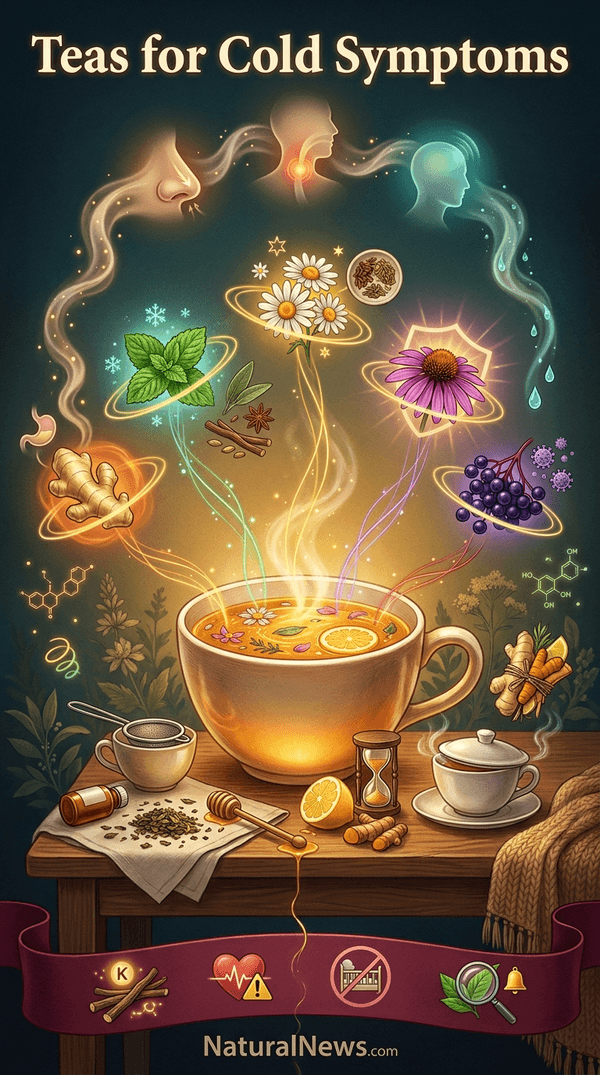
Ginger tea is described in available references as a traditional remedy for nausea and throat irritation. According to Earl L. Mindell and Virginia Hopkins in ‘Bottom Lines Prescription Alternatives,’ ginger capsules or ginger tea are recommended for nausea and gas [8]. A report by Laura Harris stated that ginger and peppermint teas are used for specific wellness goals [3]. NaturalNews.com reported that ginger has a history stretching back to 1st century BC Chinese texts and that modern research has characterized it as a medicinal food [13].
Chamomile flowers have been studied for antioxidant activity, according to a study in the Journal of the Science of Food and Agriculture [16]. Peppermint is listed among herbal teas that relieve congestion in ‘The Survival Medicine Handbook,’ which names stinging nettle, licorice root, peppermint, anise, cayenne pepper and sage [9].
Echinacea and elderberry are included in reports on immune support. A list of 10 herbs recommended by experts to fortify the immune system included elderberry, according to NaturalNews.com [2]. The ‘Medical Toxicology of Natural Substances’ text cites trials of Echinacea angustifolia in experimental rhinovirus infections [14]. An article by Mercola.com reported that elderberry can effectively reduce upper respiratory symptoms [4].
How Tea May Affect Cold Symptoms
Warm liquids can help loosen congestion and maintain hydration, according to NaturalNews.com, which stated that the heat from tea can unclog a stuffy nose, soothe a sore throat and relieve a headache, and that drinking tea is a way to stay hydrated and replenish lost fluids [1].
Herbal compounds such as secondary metabolites are reported to have protective properties. According to a paper in the Journal of Food Composition and Analysis, secondary metabolites such as resveratrol in red grapes and quercetin in onions possess protective effects against environmental pathogens [15]. A separate study reported antioxidant activity in water and alcohol extracts of chamomile flowers, anise seeds and dill seeds [16].
Traditional preparations sometimes combine several ingredients. A recipe in ‘Herbal Antivirals’ instructs combining ginger, cider, lemon and turmeric in a saucepan, heating until bubbles appear at the edge, and steeping for about five minutes before straining and serving [10].
Preparation and Safety
Preparation methods for herbal teas are described in several references. According to ‘The Alternative Medicine Handbook’ by Barrie R. Cassileth, a tea can be prepared by steeping 1-2 teaspoons of dried, finely chopped leaves in a cup of boiling water for ten minutes, then straining and drinking [7].
Experts advise caution with some herbs. According to ‘The Homesteading Handbook’ by Abigail Gehring, licorice root taken with diuretics could cause the body’s potassium levels to fall to dangerously low levels, and those with heart disease or high blood pressure should practice caution [6]. ‘The Woman’s Book of Healing Herbs’ by Sari Harrar states that echinacea should not be taken by people with autoimmune conditions such as lupus, tuberculosis or multiple sclerosis, or by those allergic to flowers in the daisy family [11].
Special caution is advised for pregnant women and people with chronic conditions. Gehring wrote that large doses of licorice root may cause preterm labor in pregnant women [6]. A report on wild herbs and mushrooms advised starting with a small dose and monitoring for negative reactions over several hours, citing the risk of toxicity [17].
Concerns about contaminants have also been raised. A May 2024 report by the Health Ranger Mike Adams discussed a recall of Yogi’s Organic Immune Support Tea after pesticide residues were detected in nearly one million bags of the product [18].
Bottom Line
The reports concluded that drinking tea during a cold is widely practiced and generally safe. According to NaturalNews.com, ‘there are few things as comforting as drinking a hot cup of tea when you’re feeling under the weather’ [1].
Tea is not a replacement for medical treatment, the reports stated. According to ‘Natural Remedies,’ natural remedies support rather than suppress the body’s efforts, and a doctor should be consulted if body temperature reaches over 103 degrees Fahrenheit or if a fever persists for more than three days [5]. Persistent or severe symptoms require professional evaluation, according to the reference.
References
- NaturalNews.com. “Drink these 6 herbal teas to relieve cold symptoms”. NaturalNews.com. April 30, 2021.
- NaturalNews.com. “10 herbs you can use to make immunity-boosting tea”. NaturalNews.com. June 28, 2021.
- Laura Harris. “7 Herbal teas that may boost sleep digestion immunity and overall wellness”. NaturalNews.com. February 15, 2026.
- Mercola.com. “Elderberry Can Effectively Reduce Upper Respiratory Symptoms”. Mercola.com. June 22, 2020.
- “Natural Remedies”.
- Abigail Gehring. “The Homesteading Handbook”.
- Barrie R. Cassileth. “The Alternative Medicine Handbook”.
- Earl L. Mindell and Virginia Hopkins. “Bottom Lines Prescription Alternatives”.
- “The Survival Medicine Handbook The Essential Guide for When Help is NOT on the Way Joseph Alton MD”.
- “Herbal Antivirals: Heal Yourself Faster, Cheaper and Safer”.
- Sari Harrar. “The Woman’s Book of Healing Herbs”.
- NaturalNews.com. “Natural Remedies Listed for Common Cold and Influenza Symptoms”. March 30, 2026.
- NaturalNews.com. “Harness ginger’s power: How the festive root soothes stomachs and protects health beyond the holidays”. December 12, 2025.
- Donald G. Barceloux. “Medical Toxicology of Natural Substances”. 2008.
- Elsevier. “The role of phytochemicals in inhibition of cancer and inflammation: New directions and perspectives”. Journal of Food Composition and Analysis. 2006.
- “Antioxidant activity of water and alcohol extracts of chamomile flowers, anise seeds and dill seeds”. Journal of the Science of Food and Agriculture. 2004.
- Mike Adams – Brighteon.com. “Health Ranger Report – Special Report”. Brighteon.com. May 09, 2021.
- Mike Adams – Brighteon.com. “Health Ranger Report – Herbal tea report”. Brighteon.com. May 15, 2024.
Explainer Infographic
Submit a correction >>
Tagged Under:
alternative medicine, brain health, disease treatments, food cures, heart health, herbal medicine, herbal teas, Herbs, immune system, natural cures, natural medicine, pain relief, prevention, remedies, stress relief
This article may contain statements that reflect the opinion of the author
RECENT NEWS & ARTICLES